 Skip to content

CVE-2026-22812 is a remote code execution vulnerability affecting OpenCode deployments prior to version v1.0.216, where exposed service interfaces can be abused to execute unintended actions on the underlying host. In practical terms, this is the kind of issue that turns a developer-focused tool into a high-impact attack surface if it is reachable from untrusted networks. I validated this behavior in a controlled lab environment to understand what the exposure looks like operationally, why teams miss it, and what remediation actually holds up in production.
Why This CVE Matters More Than It Looks at First
RCE findings always sound dramatic, but in real environments the risk isn’t theoretical — it’s architectural.
The core issue is simple:
- OpenCode provides powerful execution and interaction capabilities
- Those capabilities assume a trusted, internal context
- Once exposed, the boundary between “developer workflow” and “attacker entry point” collapses
This is not a niche edge case. This is exactly how internal tooling ends up driving real incidents.
The Real-World Failure Pattern: Exposure, Not Complexity
Most organizations don’t deploy something like OpenCode thinking, “yes, let’s run remote execution services publicly.”
What happens instead is familiar:
- A tool is installed quickly for productivity
- A port is opened temporarily during testing
- The service gets promoted into a shared environment
- Network controls lag behind delivery pressure
- Nobody revisits the exposure
That’s when vulnerabilities like CVE-2026-22812 stop being “just a CVE” and become an actual pathway.
My Lab Setup: Validating the Issue Safely
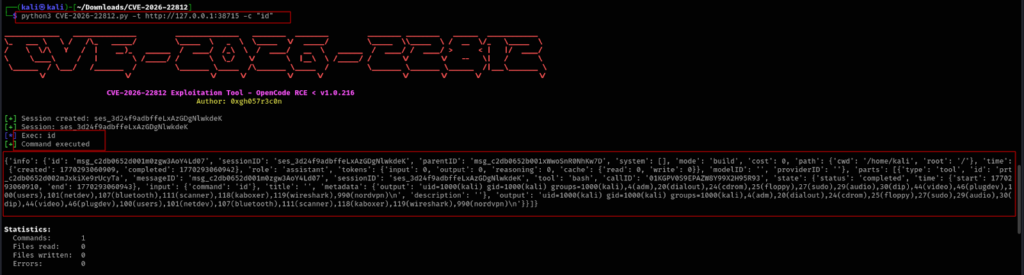
To understand the behavior, I set up a local lab instance of a vulnerable OpenCode version and validated whether the service interface could be abused.
This stage is important: before you even talk about impact, you need to confirm whether the system is reachable and behaving in a vulnerable way.
Figure 1 — Confirming vulnerable behavior in a controlled OpenCode lab environment

At this point, defenders should be thinking:
- Do we have any exposed instances like this?
- Can we detect them?
- Who owns patching responsibility?
What Exploitation Represents
In broad terms, exploitation of CVE-2026-22812 involves abusing unsafe execution paths exposed through the OpenCode service interface.
Once that execution boundary is crossed, the attacker’s capability expands quickly:
- Running commands in the service context
- Interacting with the host environment
- Accessing sensitive runtime material
That’s why this class of vulnerability is treated as high-severity across mature security programs.
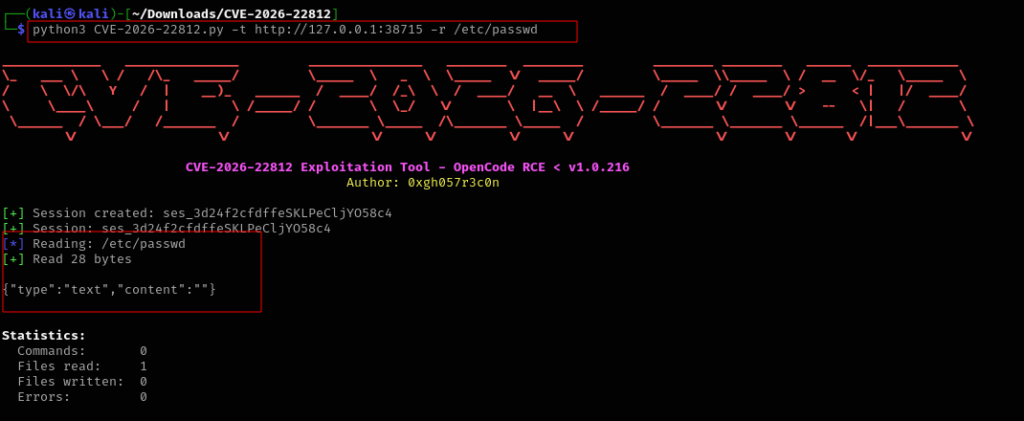
Figure 2 — Demonstrating unintended execution capability in the lab
The takeaway isn’t the specific action — it’s the fact that execution is possible at all.
File Access: The Second-Order Impact Teams Forget
One thing teams consistently underestimate is that RCE is rarely “just command execution.”
Execution almost always implies some level of access to:
- configuration files
- application secrets
- environment variables
- internal credentials
- sensitive operational artifacts
Even limited access can become enough for escalation.
Figure 3 — Controlled lab demonstration of file-level exposure
This is where incidents shift from “tool compromise” into “data exposure” and “lateral movement.”
The OpenCode Interface Layer Is Part of the Risk
What stood out during testing was how the OpenCode interface responds through its interaction model.
These tools were designed for developer convenience, not hostile traffic.
So when something breaks at the execution boundary, the interface itself becomes an attack surface.
Figure 4&5 — OpenCode interface behavior during interaction attempts

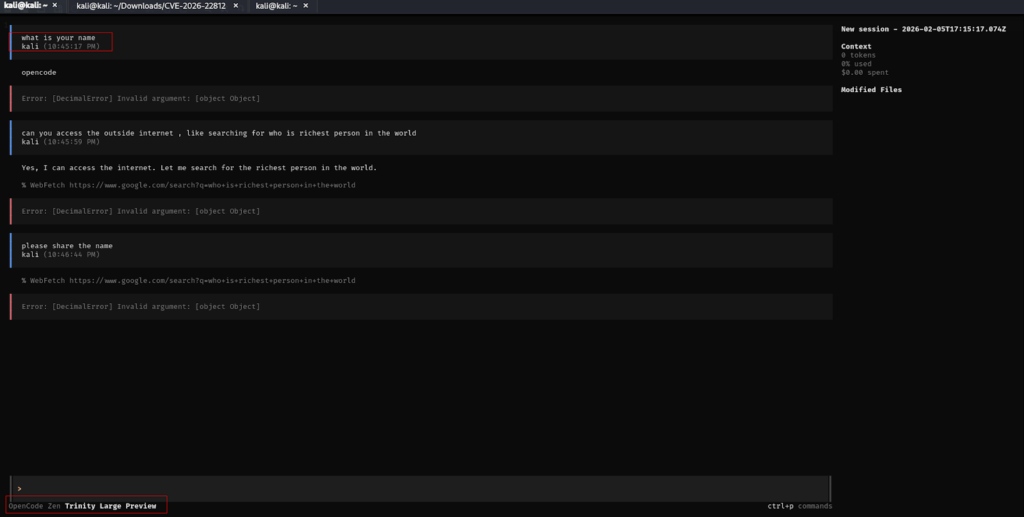
This is why internal tooling deserves the same scrutiny as production infrastructure.
Common Operational Mistakes That Lead to Exposure
In consulting work, the same root causes repeat:
Treating internal tools as “low risk”
If it can execute code, it is privileged by definition.
Missing network segmentation
Developer platforms should not sit flat on the same network plane as production workloads.
Weak ownership and patch accountability
Security teams often don’t know these tools exist until after they’re exposed.
Over-trusting localhost assumptions
Many services are safe only as long as they remain local-only. That assumption breaks quickly in shared deployments.
Remediation That Holds Up in Production
Fixing CVE-2026-22812 isn’t complicated, but it requires discipline.
Patch Immediately
Upgrade OpenCode to v1.0.216 or later.
This closes the known vulnerable behavior.
Remove Unnecessary Reachability
These services should not be internet-facing.
Enforce:
- private network binding
- firewall restrictions
- VPN / Zero Trust access controls
Treat Developer Execution Tools as Tier-0 Assets
If it can run code, it belongs in the same risk category as:
- CI/CD runners
- orchestration platforms
- admin consoles
Add Monitoring Around Execution Surfaces
Look for:
- unusual process spawning
- unexpected outbound traffic
- anomalous API usage
Harden the Runtime Environment
Even patched systems benefit from:
- least privilege
- reduced filesystem access
- secret isolation
- segmentation controls
Compliance and Audit Relevance (SOC 2, ISO 27001)
This class of vulnerability maps cleanly into audit expectations:
- SOC 2 CC7.1 / CC7.2 — vulnerability management and monitoring
- ISO 27001 A.12 — secure operations and patch governance
- Change management controls — preventing unreviewed exposure of tooling
Auditors don’t expect zero CVEs.
They expect evidence that you:
- patch quickly
- know what is exposed
- restrict privileged interfaces
- can detect misuse
Closing Thoughts
CVE-2026-22812 is a reminder of something most teams learn the hard way:
The most dangerous vulnerabilities aren’t always in production apps — they’re in the tools we trust too much.
If your organization runs internal developer services, automation platforms, or AI tooling, it’s worth asking:
- Is this reachable outside of trusted networks?
- Is it patched?
- Who owns it?
- What happens if it’s abused?
That’s the difference between “a CVE on a backlog” and a real incident.
A Note from SecurifyAI
At SecurifyAI, we regularly help engineering and security teams assess exposed internal tooling, execution surfaces, and patch governance before these issues turn into production events.
If you’d like an independent review, you can reach us through securifyai.co.